Insight Collection Kit
Nike Kids Footwear

Kids users playing “Cool or Not Cool” in Shoreditch, London, UK
Insight collection trips were high-energy but disorganised. Teams of footwear designers, PLMs, material designers, graphic designers, and merchandisers would go out to talk to kids and families, and it was often a race to get everyone's questions asked. People walked away with unanswered questions. Everyone was developing their own worksheets, games, and activities in their free time, but none of it was coordinated.
And when we showed product samples to kids, it wasn't working for anyone. Designers found it unhelpful because the work was a year or more behind them. PLMs were required to get user reactions and sound bites. The same tool was serving different purposes for different teams and working for nobody.
So I started bringing people together.
I discovered that several colleagues were independently working on insight collection in their own time. I brought the designers together first and we mapped out what we were working on, what our dream projects were, and what was getting in the way. Then I brought that list to the PLMs for their perspective.
From there I proposed a modular, plug-and-play toolkit that any team member could be trained on and deploy on any trip. The first phase was collation. Gather every game, activity, worksheet, and tool we were already using. Throw out what wasn't working. Deeply examine what was. Establish what each tool is, when to use it, and how.
We got through about half of that before a bigger problem surfaced.
As we dug in, we realised the issue wasn't just logistics. It was language. Footwear designers were asking kids design questions in design language. "How do you feel about the lockdown on this shoe?" A child doesn't know what that means. And the designer often couldn't recognise that they were leading the child or struggling to translate their question into something a kid could actually respond to.
We started working with the fit tech, who had the most experience with kids, on how to ask questions without leading. We identified who we were actually talking to: kids, parents, coaches, teachers. We mapped what each team needed to know and what language everyone was using. We were building a shared framework for how to approach conversations with kids, getting real-time feedback from the kids themselves about how questions landed.
We didn't finish the project. But what we established was significant.
A set of vetted, agreed-upon tools with clear guidance on when and how to use them. Shared understanding and empathy across teams about why each group was asking what they were asking. The beginnings of a shared language for approaching kids in research settings. A foundation that team members still use years later, even without the full kit being completed.
What we never got to was the education piece. Training every team member in the approach so it could sustain itself without someone actively championing it. That's the piece I'd build differently now, and it's informed how I think about the sustainability of process change in my consulting work.
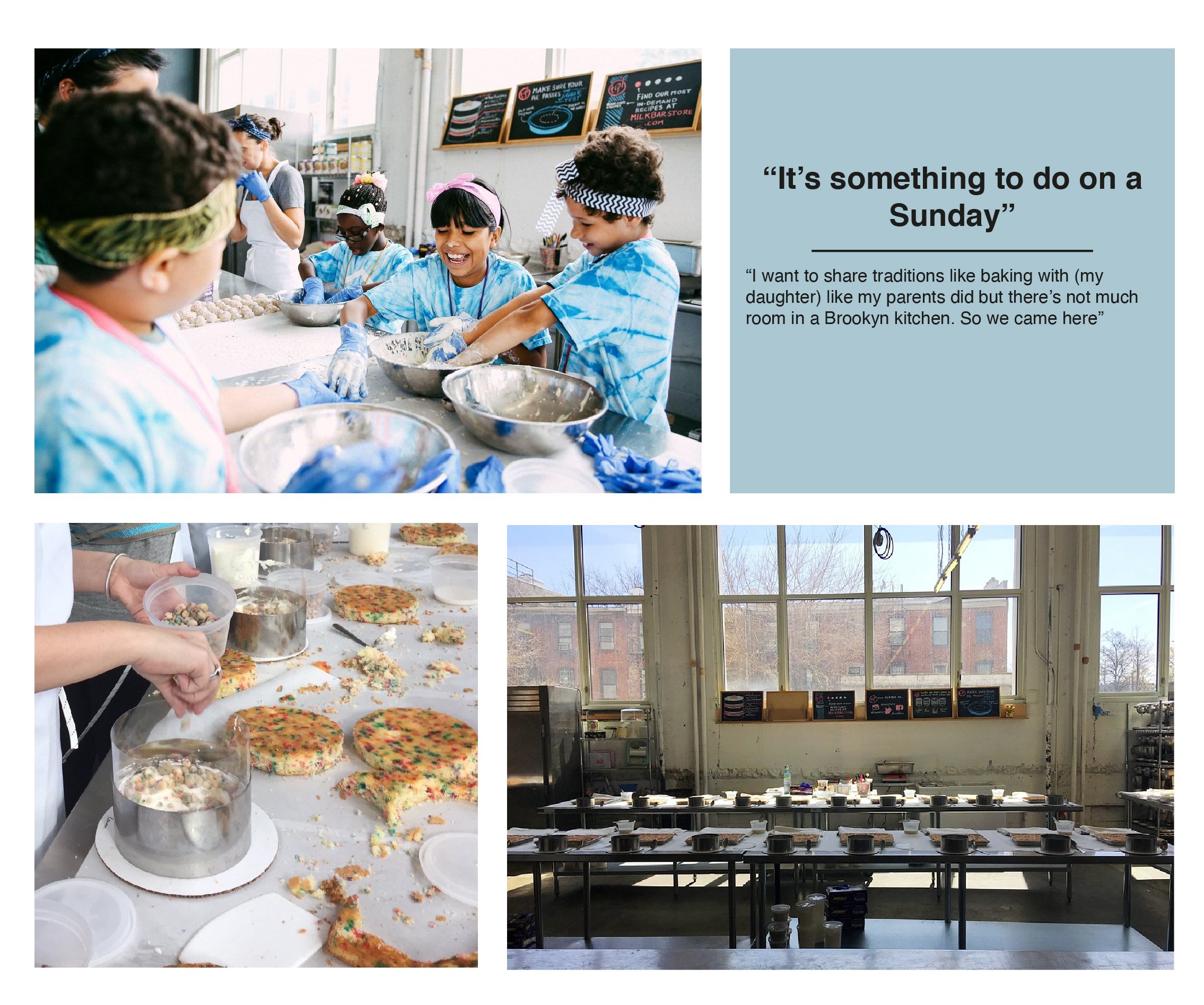
Example: Sharing Moments
On one trip, we interviewed a pair of kids who were sneaker influencers. They talked about getting into sneakers because it was something they shared with their dad and uncle. It wasn't about the shoes. It was about connection.
Separately, we interviewed a family in New York. A grandmother, a mother, and a daughter. They talked about taking cooking classes together because the family kitchen was too small to have ever baked cookies together. The adult daughter felt she'd missed out on that, so they were using family-focused cooking classes to make memories, learn a skill, and do something together.
The surface-level read was nostalgia. Parents sharing things from their childhood with their kids. But nostalgia as a design direction has a shelf life. You can only recreate it so many times before it runs out.
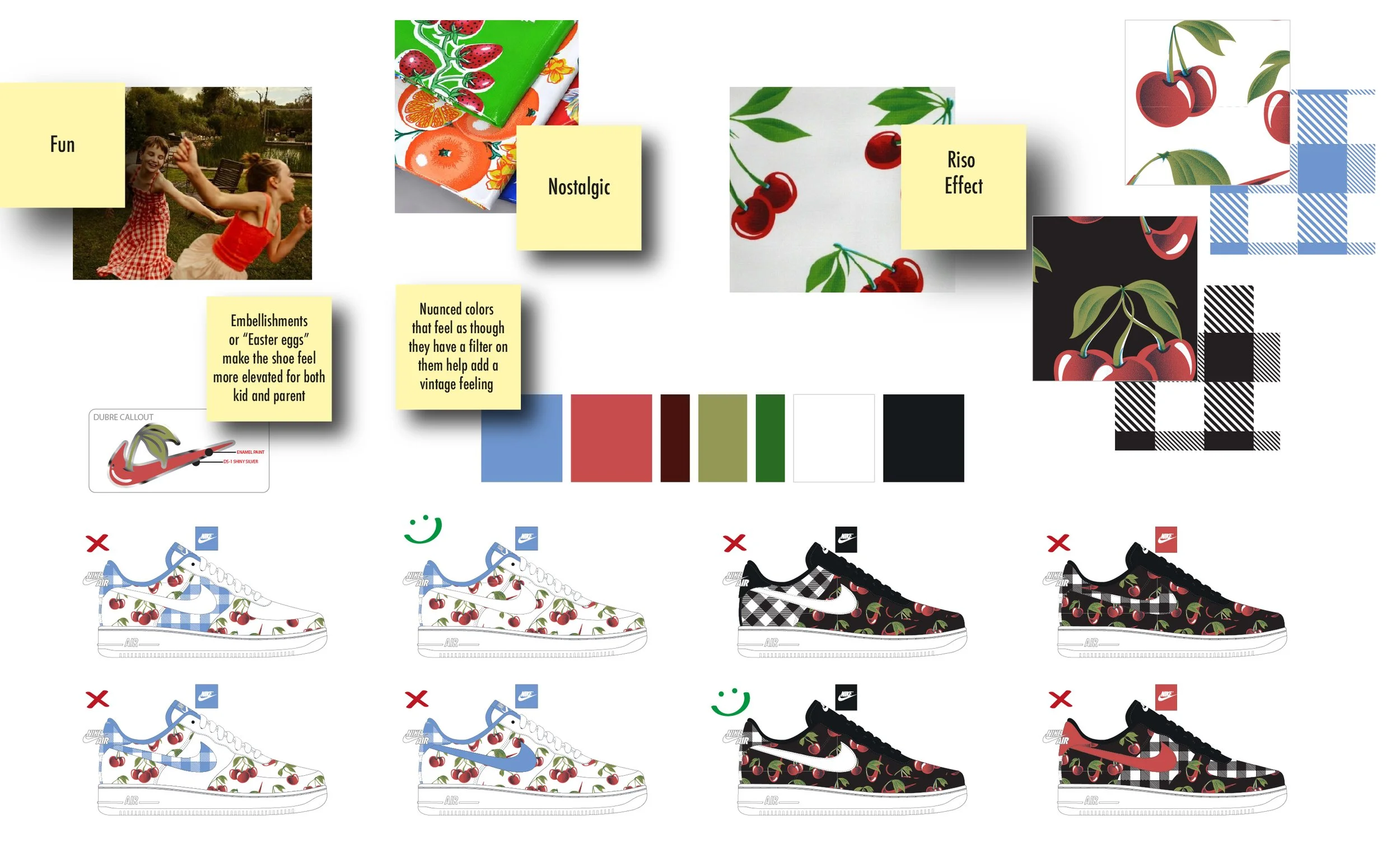
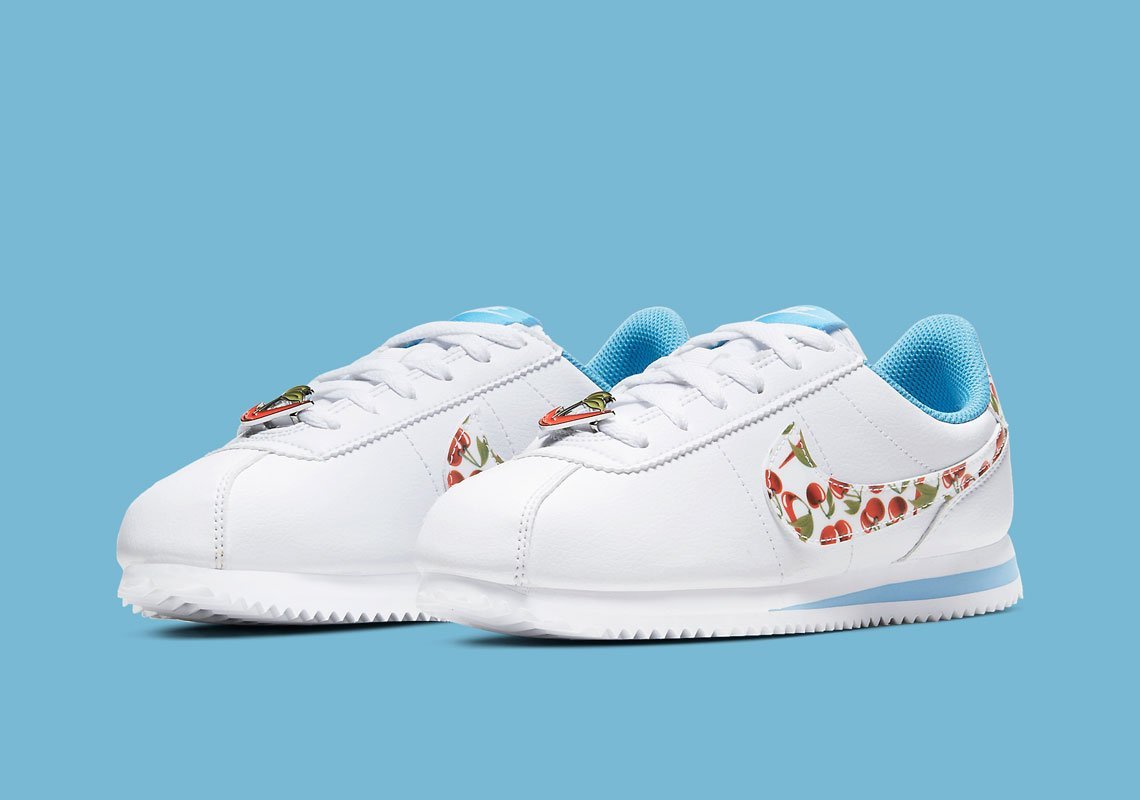
The deeper insight was about passing something down. Sharing experiences, not just products. That was a more durable and more actionable foundation for the team to build from. It led to projects including a picnic-themed collection centred on the idea of families sharing outdoor moments together.

Picnic Pack
Concept Design, Design Research and Color Design
Collaboration with Graphic Designer Steven Raznjevich and Material Designer Samuel L. Newman.




This work, alongside the Gender Spectrum Briefing, became the foundation for my PhD research at the Royal College of Art, where I expanded these questions about how design teams engage with consumers and how assumptions shape the design process.